Testing
Testing
Metals
Metals
Construction Materials
Water
Water

Knowledge Center

In a hyper-competitive landscape, knowledge empowers you to thrive in the now, the new and the unknown.

Design and Application

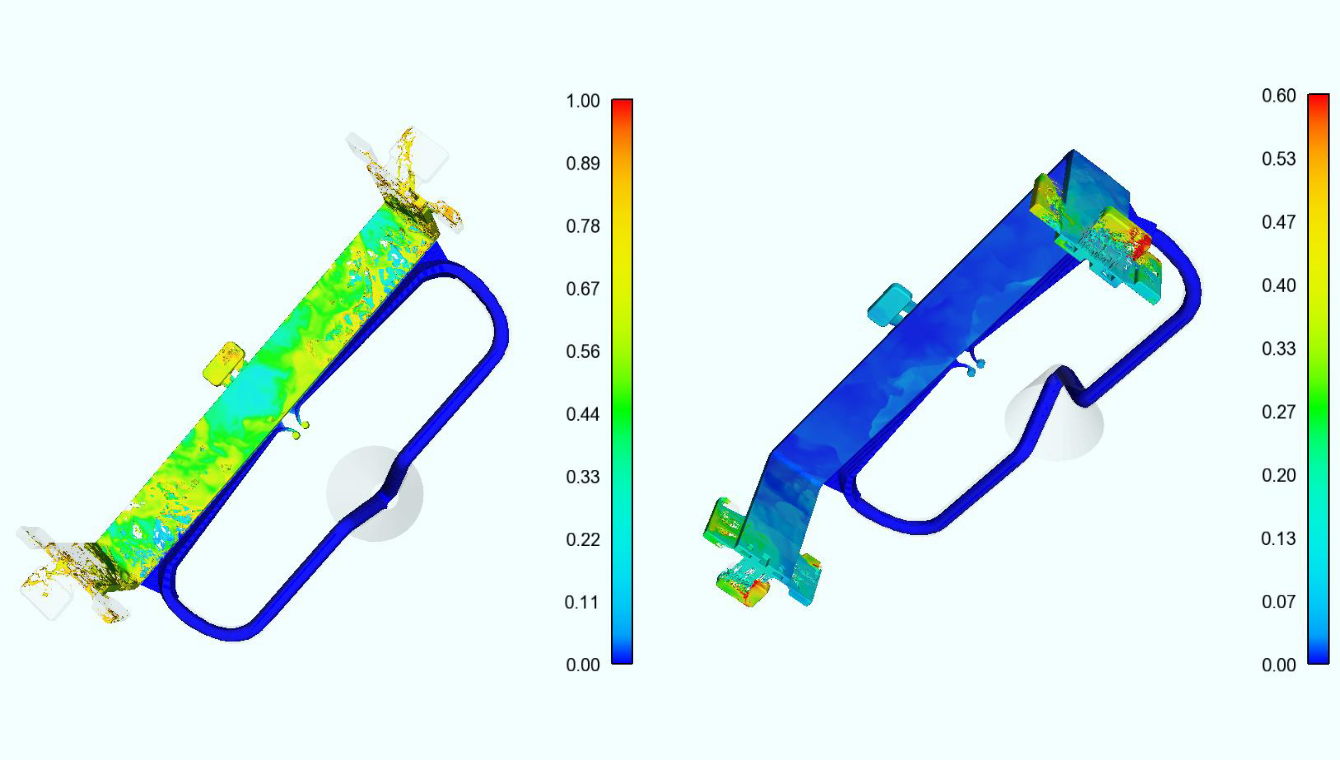
Die Casting Mold Flow Simulation: A Key Technology for Optimizing Quality and Efficiency

Mold flow simulation predicts molten metal behavior to prevent defects, optimize die casting design, and reduce trial runs. It improves quality, lowers costs, extends mold life, and shortens development time. With expert analysis and practical solutions, manufacturers can achieve higher yield, greater efficiency, and more reliable production outcomes.
Metal Products Defects

How to achieve outstanding quality, performance and costing of optical module die casting?

Nowadays, most communication equipment is transmitted by optical fiber and cable. As the terminals send and receive data as the electrical signals, the optical modules have become an indispensable device for photoelectric signals conversion at both ends. The optical module market is expected to grow rapidly in recent years, during to increasing investment in new data centers and the adoption of more expensive high-speed modules by cloud service providers, as well as expanded the development of 5G networks by global telecommunications.
Metal Composition & Testing

How to control lead content in die casting products

The recent incident of excessive lead in drinking water in Kai Ching Estate has raised public awareness of the lead content in everyday products. Many of the daily necessities, such as toys, kitchenware, bathroom appliances, and garment accessories, are die-cast products, so how to control and ensure that their lead content meets safety standards has become an important topic.

Metal Composition & Testing

How to make the process of zinc alloy electroplating copper/nickel/chromium more perfect?

Die-cast zinc alloy products have a wide range of applications, but due to the zinc alloy have low chemical stability, many zinc alloy die-casting parts require electroplating treatment to enhance anti-corrosion performance, and improve the appearance and value of the product at the same time. The most common combination electroplating with copper/nickel/chromium and various colored plating. Common zinc alloy die casting plating products include faucets, zipper pulls, belt buckles, buttons, luggage buckles, toys, locks, lampshade decorations and door handles, etc.
Metal Composition & Testing

The impact of sampling methods on the results of component assays

The segregation phenomenon in the production process of zinc alloy ingots is caused by the different densities and solidification sequences of metal elements in the alloy and the different distribution of each element in the alloy ingot during solidification. This normal physical phenomenon does not affect the production of die casting, because after the alloy ingot is melted into a liquid state, the elements are evenly distributed. However, taking too few samples or improperly area them can skew the test results compared to laboratory tests. Therefore, when we test the composition of alloys, the correct sampling method becomes important. As a result, there is a set of standard sampling methods for zinc alloy ingots in the world, such as the British EN12060. Below, we compare the effects of different sampling methods on the test results, with the test results taken by the standard method as the criterion.
Metal Products Defects

Comparison of general testing methods for detecting metal content

In the alloy manufacturing and die-casting industry, the chemical composition of raw materials and finished products is one of the most important factors in providing high-quality products. To obtain accuracy data, spark optical emission spectrometry (SPARK-OES), inductively coupled plasma atomic emission spectrometry (ICP-OES) and, increasingly, portable X-ray fluorescence spectrometry (XRF) are commonly used in the industry for composition testing. What are the advantages and disadvantages of each assay and its cover range?
Metal Composition & Testing

The Water Supplies Department of Hong Kong (WSD) has a testing requirement for new drinking water plumbing installations

The Water Supplies Department (WSD) of Hong Kong has been providing drinking water in accordance with the World Health Organization (WHO) Guidelines for Drinking Water Quality, but since the incident of excessive lead in drinking water, the safety requirements of the Government, the practitioners and the public have increased significantly. After consulting experts, the WSD formulated the Plan for Enhancing Drinking Water Safety in Hong Kong on year 2017. In the past, the WSD placed more emphasis on testing the physical, chemical and bacteriological parameters of water samples at WSD's water supply points, but through this scheme, the material requirements and acceptance of newly installed drinking-water systems have been increased. The scheme consists of five sections, namely "Enhanced Drinking Water Standards and Water Quality Monitoring", "Enhanced Regulation of Internal Water Supply System", "Water Safety Plan", "Publicity and Public Education", and "Drinking Water Safety Regulatory System".